
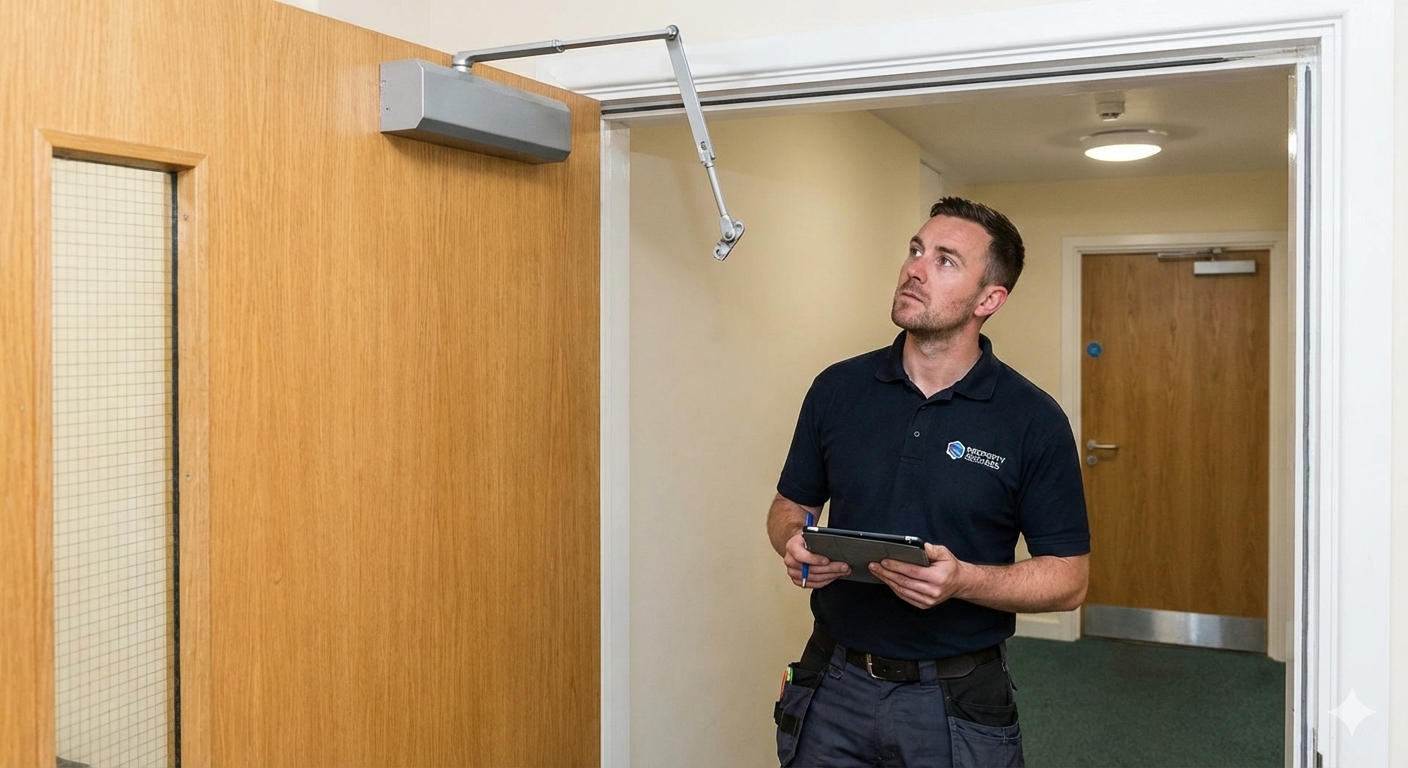
The Fire Safety (England) Regulations 2022 introduced a key legal requirement under Regulation 10: routine fire door inspections in residential buildings with common parts. But while the duty is clear, so is the government’s intent—these checks are meant to be simple, visual, and achievable by trained in-house staff.
Why In-House Staff Are the Ideal Inspectors
Regulation 10 applies to buildings with two or more domestic premises and shared common areas. For buildings where the top storey exceeds 11 metres (typically five storeys or more), the Responsible Person must:
- Check flat entrance doors at least once every 12 months
- Check communal fire doors at least once every three months
These checks are visual only and do not require tools or specialist knowledge. With appropriate instruction, caretakers, housing officers, managing agents, and maintenance personnel can confidently carry out these inspections during routine visits. This approach avoids placing undue financial burdens on freeholders and leaseholders—a principle clearly supported by government guidance. It also frees up expert fire door carpenters to focus on repairs.
Government Guidance Offers Reassurance
The Home Office guidance makes it explicitly clear:
“It can be assumed that the Responsible Person has evidence that the design, specification and installation of the door is adequate for its location or is taking separate measures to deal with any inadequacies in inherent fire performance.” This means that Regulation 10 is not about assessing the fire resistance rating or technical compliance of the door—that’s the job of your fire risk assessment under the Fire Safety Order. Instead, Regulation 10 focuses on basic, visual checks to ensure that fire doors remain in good working order and haven’t been compromised by wear, damage, or resident alterations.
This means that Regulation 10 is not about assessing the fire resistance rating or technical compliance of the door, that’s the job of your fire risk assessment under the Fire Safety Order and amendments made by The Fire Safety Act. Instead, Regulation 10 focuses on basic, visual checks to ensure that fire doors remain in good working order and haven’t been compromised by wear, damage, or resident alterations.
Fire Risk Assessment: The Right Place for Deeper Investigation
While Regulation 10 checks are simple and visual, the fire risk assessment remains the cornerstone of your building’s fire safety strategy. It should consider more technical aspects of fire door performance, including:
- The type and rating of fire doors installed
- The competency of installation
- The presence and condition of firestopping between the door frame and surrounding wall
If the fire risk assessment identifies a potential risk due to inadequate or missing firestopping, it should recommend further investigation by a competent professional. This ensures that the fire door assembly performs as intended in the event of a fire and complements the routine visual checks carried out under Regulation 10.
What Should Staff Be Trained to Look For?
Training should focus on helping staff identify rudimentary defects that could compromise fire door performance. According to the official guidance, checks should include:
- Door integrity: Damage to the door, frame, or surrounding wall, splits, warping, or missing components.
- Letterboxes: Ensure they are firmly closed and suitable for fire-resisting doors.
- Glazing: Check for cracks or damage to fire-resisting glass panels.
- Gaps: Use simple gap tester cards to confirm gaps around the door are no more than 4mm (except at the bottom).
- Self-closing devices: Test that doors close fully from any angle, critical to containing fire and smoke.
- Intumescent strips and smoke seals: Confirm they are intact, not painted over, and make proper contact with the frame.
These checks are not substitutes for a full fire risk assessment, which remains the domain of qualified assessors. However, they are essential for maintaining the integrity of fire safety measures between formal assessments.
Freeing Up Fire Door Specialists for Repairs and Technical Checks
By training in-house staff to carry out basic visual inspections, you also free up qualified fire door inspection carpenters and fire safety contractors to focus on what they do best: repairs, adjustments, and technical fixes. This includes:
- Easing and adjusting doors that stick or fail to close properly
- Replacing damaged or missing intumescent strips and smoke seals
- Repairing or replacing faulty self-closing devices
- Sampling the frame-to-wall gap sealing to ensure firestopping is present and effective
- Applying BS 8214-compliant frame-wall gap sealing methods where deficiencies are found
These tasks require specialist knowledge and tools, and are best handled by competent professionals. By reserving their time for remedial work rather than routine checks, you ensure that your building’s fire safety resources are used efficiently and effectively.
Resident Engagement: A Key Advantage of In-House Teams
One of the most overlooked benefits of using in-house staff is their existing relationship with residents. Gaining access to flats for entrance door checks requires cooperation, and familiar faces are more likely to receive it. Staff can:
- Schedule checks flexibly to suit residents
- Explain the importance of inspections
- Encourage reporting of faults or tampering
- Record access attempts
- Use internal systems for reporting
- Combine fire door inspections with other fire safety checks including PEEPs and Smoke detectors
In cases of persistent non-access, having a documented trail of best endeavours is crucial—and in-house teams are best positioned to build that record and comply with internal access processes and procedures.
Supporting Tools: Checklists and Action Plans
To streamline inspections, staff should be equipped with:
- Training to give confidence on fire door inspections
- A checklist covering all visual elements (door type, gaps, seals, signage, etc.)
- A way to report issues to insure doors are repaired or replaced by qualified carpentry teams or contractors
These tools not only support consistency but also provide a clear audit trail for compliance and follow-up.
Final Thoughts
Training in-house staff to carry out fire door inspections is not just a cost-effective solution, it’s a strategic move that aligns with the spirit and letter of Regulation 10. The government guidance is clear: you are not expected to assess fire resistance or engage specialists for these checks. By empowering your team with the right knowledge and tools, you ensure safer buildings, stronger resident relationships, and full compliance with the law.